
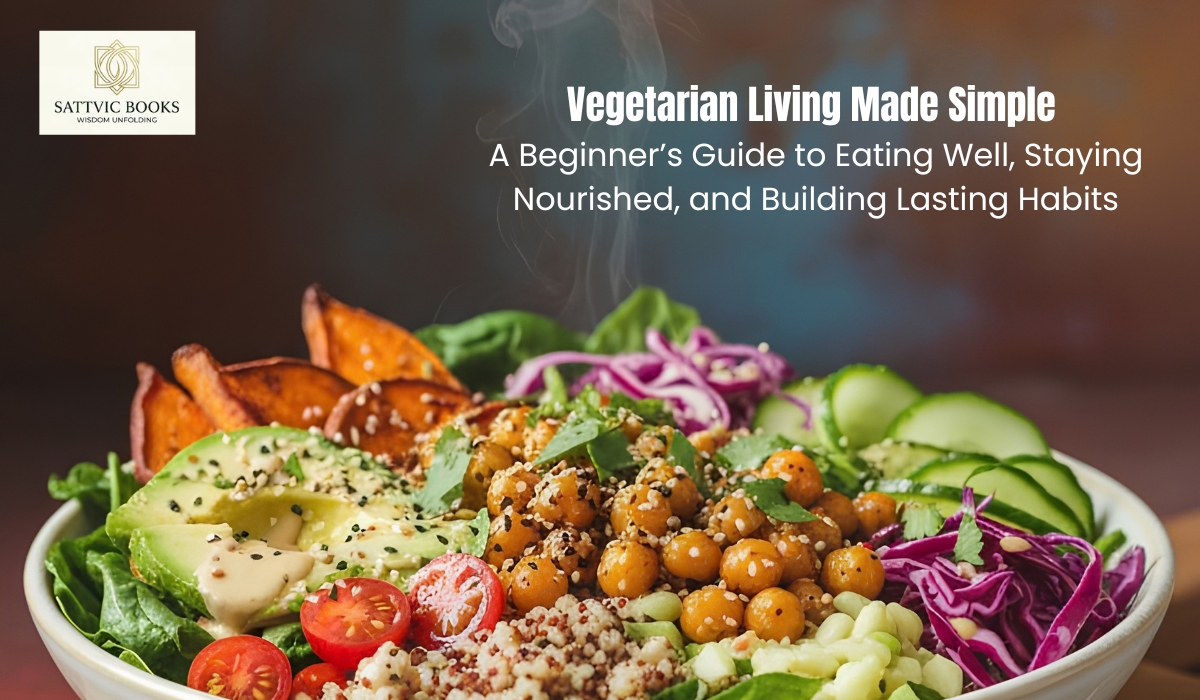
Vegetarian Living Made Simple: A Beginner’s Guide to Eating Well, Staying Nourished, and Building Lasting Habits
Vegetarian living does not have to mean complicated recipes, restrictive rules, or giving up the foods and traditions you love. Learn how to start a nourishing, balanced vegetarian lifestyle with simple meals, practical nutrition guidance, and realistic habits that last.
Vegetarian living is not one rigid way of eating. It is a flexible, personal approach to food and daily life that centers vegetables, fruits, legumes, grains, nuts, seeds, and other plant foods, while allowing each person to decide what fits their body, culture, budget, schedule, and values.
Some people become vegetarian for animals. Some are drawn to the environmental impact of their food choices. Others want to eat more plants, bring more intention to family meals, explore a Sattvic lifestyle, or simply feel more confident cooking nourishing meals at home.
Whatever brings you here, you do not need to become a perfect vegetarian overnight.
A sustainable vegetarian lifestyle is usually built in small, practical choices:
- Cooking one satisfying plant-based dinner each week
- Learning three easy vegetarian meals you can make without a recipe
- Keeping pantry staples on hand
- Knowing which nutrients deserve attention
- Finding a simple answer for restaurants, holidays, and family gatherings
- Returning to your values after a busy or imperfect week
This guide makes vegetarian living simpler, more nourishing, and easier to sustain.
The goal is not to eat perfectly. The goal is to create meals and routines that help you feel well, supported, and at home in your choices.
What is vegetarian living?
Vegetarian living is broader than following a vegetarian diet. It includes the foods you eat, the meals you prepare, the values you bring to food, and the routines that make plant-forward eating possible in everyday life.
A vegetarian diet generally excludes meat, poultry, and seafood. However, there are several ways people may identify within vegetarian living:
Style of vegetarian living | Includes | Does not include |
Lacto-ovo vegetarian | Plant foods, dairy, eggs | Meat, poultry, seafood |
Lacto vegetarian | Plant foods, dairy | Meat, poultry, seafood, eggs |
Ovo vegetarian | Plant foods, eggs | Meat, poultry, seafood, dairy |
Vegan | Plant foods only | All animal-derived foods |
Flexitarian or plant-forward | Mostly plant foods; may include animal foods occasionally | No strict exclusion requirement |
Pescatarian | Plant foods, seafood; often dairy and eggs | Meat and poultry |
You do not have to use a label before you begin. You can start with a vegetarian breakfast, vegetarian weekdays, or one plant-based family dinner at a time.
The most useful question is not, “Am I doing this perfectly?” It is:
“What would make eating more plant-forward feel nourishing, possible, and enjoyable in my real life?”
Why people choose vegetarian living
People choose vegetarian living for many reasons, and those reasons can overlap or evolve over time.
For one person, it may begin with a desire to cook more vegetables. For another, it may be a spiritual practice rooted in ahimsa, often translated as non-harm or compassion. For someone else, it may be about health, cultural traditions, food ethics, climate concerns, finances, or a wish to make family meals feel simpler and more intentional.
Compassion for animals
Many vegetarians choose to reduce or avoid animal foods because they care about animal welfare and want their food choices to reflect that value.
This motivation can be deeply personal. For some, it is not about judgment or demanding that others eat the same way. It is about aligning daily choices with a belief in kindness and care.
Health and nourishment
A well-planned vegetarian dietary pattern can be nutritionally adequate and may offer long-term benefits for several cardiometabolic health outcomes. The Academy of Nutrition and Dietetics states that appropriately planned vegetarian and vegan diets can be nutritionally adequate for adults and may support long-term health. [eatrightpro]
A healthy vegetarian pattern tends to include more vegetables, fruits, legumes, whole grains, nuts, seeds, and fiber-rich foods. However, “vegetarian” does not automatically mean nutrient-dense. French fries, sugary drinks, refined snacks, and heavily processed foods can all be vegetarian.
The focus is not simply removing meat. It is learning how to add nourishing plant foods in satisfying combinations.
Spiritual and Sattvic living
For many people, vegetarian living connects to spiritual traditions and a desire for greater clarity, compassion, mindfulness, and harmony.
In a Sattvic-inspired lifestyle, food is not only fuel. It can be part of a daily ritual of nourishment. Choosing fresh, plant-forward meals, preparing food with care, eating without constant distraction, and sharing meals with loved ones can all become expressions of intentional living.
You do not need to follow every traditional food rule to bring this spirit into your home. Begin with presence: pause before eating, notice what feels nourishing, and choose meals that help you feel steady rather than depleted.
Environmental values
Some people reduce meat consumption because they want to lessen the environmental footprint associated with their food choices. While food systems are complex and the impact of individual choices varies by food, place, production method, and access, a plant-forward pattern is one way many people choose to align eating with environmental concerns.
Budget and simplicity
Vegetarian living can also be affordable. Beans, lentils, rice, oats, potatoes, frozen vegetables, seasonal produce, peanut butter, pasta, and canned tomatoes are often economical staples.
The most expensive version of vegetarian eating is not the only version. You do not need specialty substitutes or expensive superfoods to make satisfying vegetarian meals.
A pot of lentils, rice, roasted vegetables, and a simple yogurt or tahini sauce can be flavorful, comforting, and budget-friendly.
Nutrients to pay attention to
A balanced vegetarian diet can meet nutritional needs, but vegetarian living works best when you plan for a few key nutrients rather than assuming every plant-based meal is automatically complete.
The nutrients that commonly deserve attention include protein, iron, vitamin B12, calcium, vitamin D, iodine, zinc, and omega-3 fats. Guidance for vegetarian diets also commonly highlights iron, zinc, vitamin B12, iodine, calcium, vitamin D, and the omega-3 fatty acids EPA and DHA as nutrients to monitor, especially during pregnancy and other life stages with higher nutritional needs. [pmc.ncbi.nlm.nih][jandonline]
This is practical nutrition guidance, not individualized medical advice. If you are pregnant, breastfeeding, managing a health condition, feeding a child, have a history of disordered eating, or are concerned about fatigue or nutrient deficiency, speak with a registered dietitian or qualified healthcare professional.
Protein
Protein supports many functions in the body and is essential for building and repairing tissues. It is entirely possible to get protein from vegetarian foods, especially when you eat a variety of legumes, soy foods, dairy or eggs if included, nuts, seeds, whole grains, and fortified foods.
Easy vegetarian protein sources include:
- Lentils
- Chickpeas
- Black beans, kidney beans, and white beans
- Tofu and tempeh
- Edamame
- Greek yogurt, cottage cheese, milk, or cheese, if you eat dairy
- Eggs, if you eat eggs
- Seitan, if you tolerate gluten
- Peanuts, peanut butter, almonds, and other nuts
- Pumpkin seeds, hemp seeds, and chia seeds
- Quinoa
- Protein-fortified plant milks and yogurts
You do not need to combine specific proteins at every meal. Eating a varied diet over the course of the day generally provides the amino acids your body needs.
Iron
Iron helps your body make hemoglobin, which carries oxygen in the blood. Vegetarian sources of iron include beans, lentils, tofu, leafy greens, fortified cereals, pumpkin seeds, dried fruit, and whole grains.
Plant-based iron is not absorbed in exactly the same way as iron from animal foods, so pairing iron-rich foods with vitamin C can help. Try:
- Lentil soup with tomatoes or lemon
- Black beans with salsa
- Tofu stir-fry with bell peppers and broccoli
- Oatmeal topped with berries
- Chickpeas with a citrus dressing
- Spinach with strawberries, oranges, or a lemon vinaigrette
The Dietary Guidelines note that iron can be a nutrient of concern for people following vegetarian patterns, particularly for certain groups of women. If you experience persistent fatigue, weakness, shortness of breath, dizziness, or other concerns, do not self-diagnose, ask a healthcare professional whether testing is appropriate. [dietaryguidelines]
Vitamin B12
Vitamin B12 deserves special attention because it is naturally found in animal foods rather than plants. People who eat eggs and dairy may get some B12 from those foods, but vegans and many vegetarians need reliable sources from fortified foods and/or supplements.
The NIH Office of Dietary Supplements notes that animal foods, but not plant foods, naturally contain vitamin B12. Fortified breakfast cereals, nutritional yeast with added B12, and some plant-based milks or meat alternatives can contribute, but check labels because products vary.[ods.od.nih]
If you eat fully vegan or mostly plant-based, discuss a reliable B12 strategy with a clinician or registered dietitian. Do not rely on unfortified seaweed, mushrooms, or fermented foods as your only source.
Calcium and vitamin D
Calcium supports bones, teeth, muscles, and nerves, while vitamin D helps your body absorb calcium and plays other important roles.
If you include dairy, milk, yogurt, and cheese can contribute calcium. Vegetarian and vegan sources may include:
- Calcium-set tofu
- Fortified plant milks
- Fortified orange juice
- Fortified cereals
- Kale, bok choy, and other leafy greens
- Tahini and sesame seeds
- Almonds
- Beans and lentils
Vitamin D can be harder to get through food alone. Fortified foods may help, but individual needs vary based on location, sun exposure, skin tone, age, health, and other factors. A healthcare professional can help determine whether you need testing or supplementation.
Iodine
Iodine supports normal thyroid function. Iodized salt is a common and reliable dietary source in the United States, though not all salt is iodized.
If you use specialty salts, such as sea salt, Himalayan salt, kosher salt, or gourmet finishing salt, check the label rather than assuming it contains iodine. The NIH notes that iodized salt is the most widely used strategy for preventing iodine deficiency. [ods.od.nih]
Seaweed can contain iodine, but its iodine content is highly variable. Do not treat it as a casual daily supplement without professional guidance.
Omega-3 fats
Omega-3 fats are important for health. Plant foods provide alpha-linolenic acid, or ALA, while EPA and DHA are found most directly in fatty fish and algae-based supplements.
Vegetarian sources of ALA include:
- Ground flaxseed
- Chia seeds
- Hemp seeds
- Walnuts
- Canola oil
- Soy foods
A simple habit: add ground flax or chia to oatmeal, smoothies, yogurt, or overnight oats.
Some people, especially those who are pregnant or breastfeeding, may need to discuss EPA and DHA with a clinician. Algae-derived supplements are a vegetarian source of EPA and DHA. [jandonline][ods.od.nih]
Zinc
Zinc supports immune function, wound healing, and many other processes. Vegetarian sources include beans, lentils, chickpeas, whole grains, nuts, seeds, dairy products, and fortified cereals.
Soaking, sprouting, fermenting, and cooking beans and grains can support digestion and may help make some minerals more available. You do not need to do this with every meal; it is simply one useful traditional practice to explore.
Easy vegetarian meals for beginners
The easiest vegetarian meals are not complicated. They rely on a simple formula:
Protein + produce + satisfying carbohydrate + flavor
For example:
- Chickpeas + roasted vegetables + rice + lemon-tahini sauce
- Lentils + tomatoes and spinach + pasta + herbs
- Tofu + broccoli and peppers + noodles + sesame-ginger sauce
- Eggs + greens + potatoes + salsa
- Black beans + corn + rice + avocado + lime
When you learn a few flexible meal templates, vegetarian cooking becomes much less intimidating.
1. The grain bowl
Choose:
- A base: brown rice, quinoa, couscous, farro, or noodles
- A protein: chickpeas, lentils, tofu, tempeh, black beans, eggs, or edamame
- Vegetables: roasted, sautéed, raw, or frozen
- Flavor: hummus, pesto, salsa, tahini dressing, yogurt sauce, lemon, herbs, or hot sauce
- Optional topping: seeds, nuts, avocado, cheese, or pickled vegetables
Example: Brown rice, roasted sweet potatoes, chickpeas, spinach, cucumber, tahini-lemon dressing, and pumpkin seeds.
2. The one-pot lentil meal
Lentils cook quickly, are affordable, and work in soups, curries, chili, pasta sauces, and grain bowls.
Simple red lentil tomato soup:
- Sauté onion, garlic, and carrots in olive oil.
- Add red lentils, canned tomatoes, vegetable broth, cumin, and paprika.
- Simmer until the lentils are soft.
- Finish with lemon juice and fresh herbs.
- Serve with whole-grain bread, rice, or a simple salad.
3. The vegetarian taco night
Tacos are easy to customize for different preferences, making them ideal for families and social meals.
Fill tortillas with:
- Black beans or pinto beans
- Roasted sweet potatoes
- Corn
- Sautéed peppers and onions
- Shredded cabbage
- Salsa
- Avocado or guacamole
- Cilantro and lime
- Cheese or yogurt, if included in your diet
Set everything out buffet-style so everyone can build their own meal.
The quick tofu stir-fry
Tofu is a versatile vegetarian protein that takes on the flavors around it.
- Press or pat tofu dry.
- Cube it and sauté until lightly golden.
- Add frozen stir-fry vegetables, broccoli, mushrooms, carrots, or bell peppers.
- Stir in a simple sauce of soy sauce or tamari, ginger, garlic, sesame oil, and a little maple syrup or honey if desired.
- Serve over rice or noodles.
For beginners, pre-baked tofu or marinated tofu can make the process even faster.
5. The “pantry pasta” dinner
Keep these ingredients in your kitchen: pasta, canned beans or lentils, canned tomatoes, garlic, olive oil, frozen spinach, herbs, and nutritional yeast or parmesan if desired.
Example: Cook pasta. Sauté garlic and red pepper flakes in olive oil. Add canned white beans, tomatoes, spinach, and herbs. Toss with pasta and finish with lemon juice.
This meal is easy, affordable, and adaptable to what you already have.
6. The breakfast-for-dinner plate
Vegetarian living becomes easier when you stop believing dinner has to look a certain way.
Try:
- Eggs or tofu scramble
- Roasted potatoes or whole-grain toast
- Sautéed spinach or leftover vegetables
- Fruit
- Yogurt or plant-based yogurt
- Tea or water with lemon
Breakfast-for-dinner can be nourishing, comforting, and ready in minutes.
A simple vegetarian grocery list
Build your grocery list around foods you will actually use. Start with a small, repeatable set of staples.
Category | Beginner-friendly vegetarian staples |
Protein | Lentils, canned beans, chickpeas, tofu, tempeh, eggs, Greek yogurt, edamame |
Grains and starches | Oats, rice, quinoa, pasta, potatoes, whole-grain bread, tortillas |
Vegetables | Spinach, onions, carrots, bell peppers, broccoli, sweet potatoes, frozen mixed vegetables |
Fruit | Bananas, apples, berries, oranges, seasonal fruit |
Flavor builders | Garlic, ginger, lemons, herbs, salsa, soy sauce, canned tomatoes, curry paste, spices |
Healthy fats | Olive oil, avocado, peanut butter, tahini, nuts, seeds |
Nutrient support | Fortified plant milk, fortified cereal, nutritional yeast with B12, iodized salt |
You do not need every item at once. Choose a few proteins, a few vegetables, one or two grains, and flavor ingredients you enjoy.
Eating out and social situations
One of the biggest concerns about vegetarian living is social ease: restaurants, work lunches, family dinners, holidays, travel, weddings, and gatherings where you do not control the menu.
The goal is not to become difficult or apologetic. It is to become prepared, flexible, and clear.
Eating out as a vegetarian
Before choosing a restaurant, look at the menu online. Search for:
- Vegetarian or vegan sections
- Bean-based soups, grain bowls, curries, salads, tacos, pasta, pizza, and vegetable-forward sides
- Tofu, tempeh, lentil, chickpea, or mushroom dishes
- Options that can be modified without meat or fish
- Whether broths, sauces, and rice are vegetarian if that matters to you
A simple, polite restaurant question can save confusion:
“I do not eat meat, poultry, or seafood. Which dishes can be prepared vegetarian?”
If you need to ask about hidden ingredients, be specific:
“Is the soup made with chicken or beef broth?”
“Does this sauce contain fish sauce?”
“Can the dish be made without meat and with beans or tofu instead?”
Navigating family meals
Family traditions matter. Food can carry love, memory, culture, and belonging. You do not have to reject all of that to eat differently.
Try these approaches:
- Bring one substantial vegetarian dish to share.
- Let the host know in advance, kindly and clearly.
- Focus on the foods you can enjoy rather than commenting on others’ plates.
- Share your reason only if you want to; “I have been eating vegetarian lately” is enough.
- Offer to help cook so you can contribute a dish everyone may enjoy.
- Keep an easy backup snack or meal available if you are unsure what will be served.
What to say when people ask questions
You do not owe anyone a debate about your food.
Try simple responses:
- “I feel good eating this way, and I am enjoying learning new meals.”
- “I am focusing on more plant-based foods right now.”
- “I eat vegetarian because it aligns with my values.”
- “Thank you for asking. I would rather just enjoy dinner tonight.”
- “I have found a few meals I love, want the recipe?”
Let your vegetarian lifestyle be an invitation, not a performance.
Travel and vegetarian living
Travel becomes easier with a little preparation:
- Research nearby restaurants before you arrive.
- Pack shelf-stable snacks: nuts, fruit, roasted chickpeas, granola, oatmeal packets, or nut butter.
- Keep a short list of reliable orders: vegetable curry, bean burrito, tofu stir-fry, pasta primavera, grain bowl, veggie sushi, or breakfast eggs and toast if included in your diet.
- Learn a few food phrases if traveling internationally.
- Choose accommodation with a mini-fridge or kitchenette when possible.
How to stay consistent
Consistency does not mean eating the same meals forever or never making an exception. It means having systems that make your values easier to practice than to abandon.
Here are practical ways to make vegetarian living sustainable.
Start with additions, not deprivation
Instead of focusing first on what you are removing, focus on what you are adding:
- Add beans to one meal each week.
- Add a vegetable to breakfast.
- Add one vegetarian dinner to your rotation.
- Add a plant-based lunch you genuinely enjoy.
- Add a new spice, sauce, or cuisine to make vegetables more exciting.
This approach feels more abundant and helps you build skill and confidence.
Keep five “default meals”
Default meals are the simple dishes you can make when you are tired, busy, hungry, or uninspired.
Your list might include:
- Black bean tacos
- Lentil soup and toast
- Tofu vegetable stir-fry
- Pasta with white beans and spinach
- Grain bowls with chickpeas and whatever vegetables you have
Write your defaults somewhere visible. Decision fatigue is one of the biggest barriers to consistent vegetarian eating.
Batch-prep ingredients, not perfect meals
You do not need to spend an entire Sunday making a week of identical containers.
Instead, prepare flexible building blocks:
- Cook a pot of rice, quinoa, or pasta
- Roast a sheet pan of vegetables
- Wash greens
- Make a simple dressing or sauce
- Cook lentils or open and rinse canned beans
- Portion snacks
- Keep fruit visible
Then mix and match throughout the week.
Make the vegetarian choice convenient
The foods you see and prepare first are often the foods you eat.
Keep:
- Beans and lentils at eye level in the pantry
- Fruit on the counter
- Washed vegetables at the front of the refrigerator
- Frozen vegetables for busy nights
- A few flavorful sauces in the fridge
- A list of easy vegetarian takeout options on your phone
Vegetarian living should not rely on willpower alone. It should be supported by your environment.
Expect imperfect days
You may travel, eat at a relative’s home, forget to grocery shop, get sick, have an intense work week, or simply want something different.
One meal does not define your lifestyle.
If you make a choice that does not match your usual pattern, respond with curiosity rather than guilt. Ask what made the vegetarian option harder that day. Maybe you needed more protein, better planning, more satisfying meals, or more flexibility.
Then adjust.
Long-term benefits of vegetarian living
The most meaningful benefits of vegetarian living often show up over time, not because the lifestyle is magical, but because repeated plant-forward choices can change your relationship with food, cooking, and daily care.
A well-planned vegetarian diet can be nutritionally adequate and may support several long-term health outcomes. Research and professional guidance associate healthy plant-forward dietary patterns with favorable cardiovascular risk factors, including improvements in blood pressure, lipid management, glucose metabolism, and weight-related outcomes.[eatrightpro][pmc.ncbi.nlm.nih]
Potential long-term benefits may include:
More fiber-rich meals
Vegetables, fruits, beans, lentils, whole grains, nuts, and seeds are naturally rich in fiber. Fiber supports digestive health and helps create satisfying meals.
A vegetarian lifestyle can make it easier to regularly include these foods, especially when beans, lentils, vegetables, and whole grains become everyday staples rather than occasional side dishes.
Greater variety in the kitchen
Many people discover that vegetarian living expands their cooking rather than limiting it.
You may learn to use spices differently, try regional cuisines, become more creative with vegetables, explore lentils and beans you never used before, and find new family favorites.
Vegetarian cooking can introduce you to Indian dals, Mediterranean grain salads, Mexican bean dishes, Ethiopian lentil stews, East Asian tofu meals, Middle Eastern chickpea recipes, and countless vegetable-forward traditions.
A more intentional relationship with food
When you become vegetarian, you often become more aware of what is in your meals, where your food comes from, and how different foods make you feel.
This awareness can lead to more intentional grocery shopping, less automatic eating, more home cooking, and a deeper appreciation for meals shared with others.
Greater alignment with personal values
For many people, the long-term benefit is emotional and ethical. Their food choices feel more aligned with compassion, spirituality, environmental values, cultural heritage, or a wish to live more consciously.
That sense of alignment can be a powerful reason to continue.
A sustainable personal practice
Vegetarian living does not need to be dramatic to be meaningful. Over time, small habits become normal:
- You know how to make a meal from pantry basics.
- You order comfortably at restaurants.
- Your family has favorite vegetarian dinners.
- Your kitchen reflects your values.
- You have a reliable way to nourish yourself during a busy week.
This is where vegetarian living becomes less of a diet and more of a way of caring for yourself and your world.
Frequently asked questions
Vegetarian living can be healthy when meals are varied and thoughtfully planned. A balanced vegetarian pattern includes protein-rich foods, vegetables, fruits, whole grains, healthy fats, and reliable sources of nutrients such as vitamin B12, iron, calcium, vitamin D, iodine, zinc, and omega-3 fats. Appropriately planned vegetarian diets can be nutritionally adequate for adults.[eatrightpro][jandonline]
Yes. Beans, lentils, tofu, tempeh, edamame, eggs, dairy products, nuts, seeds, whole grains, and protein-fortified foods can all contribute protein. The key is eating varied, satisfying meals consistently.
Because vitamin B12 is naturally found in animal foods rather than plants, vegans and many vegetarians should use reliable fortified foods and/or supplements. Discuss your personal needs with a healthcare professional, especially if you are pregnant, breastfeeding, managing a medical condition, or have symptoms that concern you.[ods.od.nih][ods.od.nih]
It does not have to be. Some of the most affordable foods are vegetarian staples: lentils, beans, rice, oats, potatoes, pasta, frozen vegetables, seasonal produce, peanut butter, and canned tomatoes. Specialty meat substitutes and packaged snacks are optional, not required.
Start with one meal everyone can enjoy, such as tacos, pasta, stir-fry, soup, pizza, grain bowls, or baked potatoes with toppings. You do not have to make separate complicated meals. Build a shared vegetarian base, then allow family members to add foods according to their preferences if needed.
Bean tacos, lentil soup, pasta with beans and vegetables, tofu stir-fry, and grain bowls are all beginner-friendly options. The best choice is one that uses ingredients you already enjoy and can make again on a busy day.
Make vegetarian living your own
Vegetarian living is not a test of purity. It is an invitation to become more intentional about what nourishes you.
Start with the foods you love. Learn a few easy vegetarian meals. Pay attention to the nutrients that support your body. Keep your pantry practical. Give yourself grace in social situations. And remember that consistency is built through flexible systems, not through guilt.
You do not need a perfect meal plan to begin.
You need one nourishing next meal.
Begin your vegetarian reading journey
At Sattvic Books, we believe food is more than fuel. It is a daily opportunity to slow down, nourish yourself, share with others, and create a more conscious life.
Explore our collection of vegetarian living ebooks, plant-forward recipe guides, mindful meal rituals, and Sattvic-inspired reading companions. Choose one book, cook one recipe, and let one small act of nourishment become part of your everyday life.